Interlocking stone looks great on day one. Five years in, the weeds are growing through the joints, pavers are shifting, and you're pressure washing every spring. Here's why stamped asphalt is the smarter choice.
Why Stamped Asphalt Driveways Outperform Interlocking Stone (And Look Better Too)
Walk through any neighbourhood where interlocking stone driveways were installed a decade ago. Look carefully. The joints have weeds growing through them. Some pavers have sunk unevenly in the tire tracks. The edge restraints are heaving. The homeowner is out there every spring with a pressure washer, a bag of jointing sand, and a steadily growing sense of buyer's remorse.
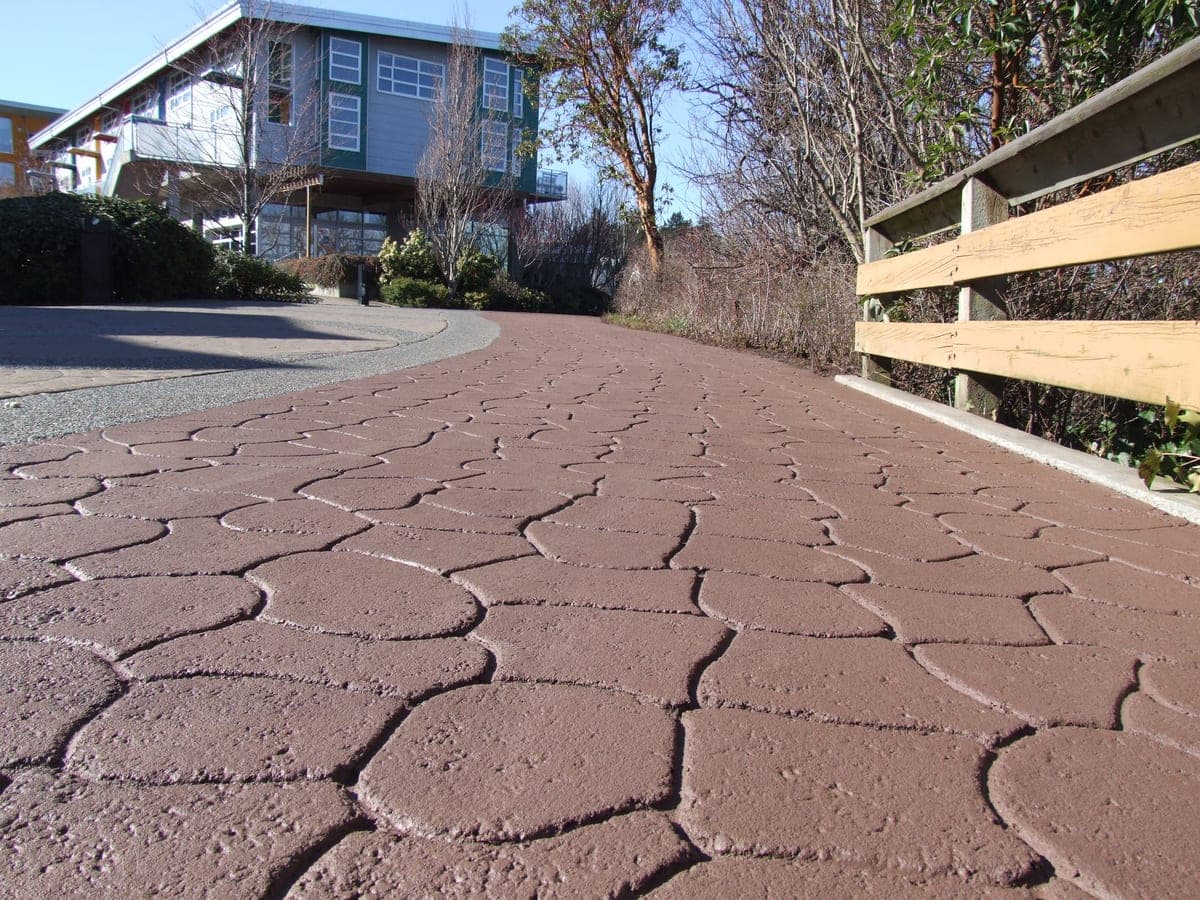
Now look at the stamped asphalt driveway next door. Same herringbone pattern. Same warm terracotta colouring. Still flat. Still tight. No weeds.
This is the story we see play out across residential properties in British Columbia, Ontario, and across Canada. And it's why StreetPrint stamped asphalt has quietly become the preferred choice for homeowners who want premium aesthetics without the premium maintenance commitment.
What Stamped Asphalt Actually Is
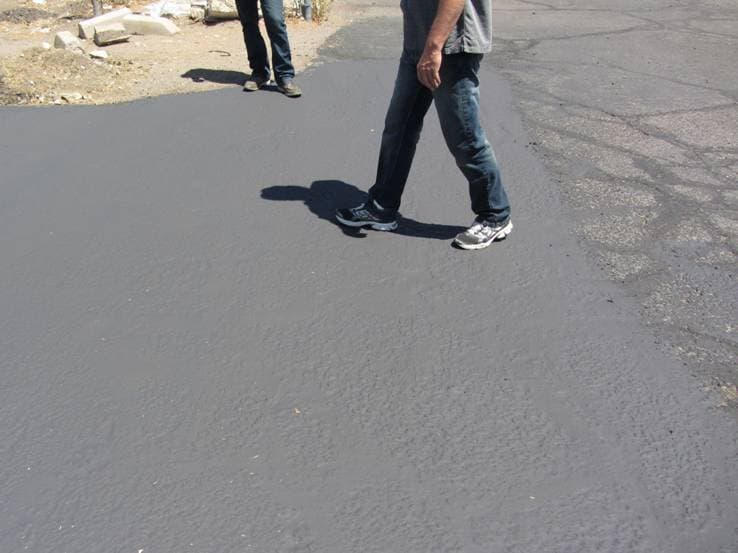
StreetPrint isn't a coating applied on top of regular asphalt — it's a process performed while the asphalt is still hot and workable. Immediately after the fresh asphalt is placed, heated steel templates are pressed into the surface, locking in the pattern dimension before the asphalt cures. The texture isn't painted on. It's stamped in.
Once the pattern is set, StreetBond colour coating is applied — a UV-stable acrylic formula originally developed for municipal streetscapes. The same product that holds its colour on a high-traffic city plaza for 20+ years is what gives your driveway its brick-red, slate-grey, or charcoal herringbone finish. DuraShield protective topcoat seals the finished surface against water infiltration, oil staining, and the freeze-thaw cycling that causes premature pavement failure in Canadian climates.
The whole installation typically takes one to two days. You drive on it within 24 hours.
The Honest Comparison
| Stamped Asphalt | Interlocking Stone | Plain Asphalt | Decorative Concrete | |
|---|---|---|---|---|
| Installed cost | $$ | $$$$ | $ | $$$ |
| Installation time | 1–2 days | 3–7 days | 1 day | 3–5 days |
| Lifespan | 20+ years | 8–12 years* | 15–20 years | 10–15 years* |
| Freeze-thaw performance | Excellent — flexible | Good — if well maintained | Good | Poor — brittle, spalls |
| Maintenance | Periodic resealing | Annual sand, pressure wash, paver replacement | Crack sealing | Crack/spall repair |
| Weed resistance | Seamless — zero joints | Joints require ongoing treatment | N/A | N/A |
| Snowplow safe | Yes | Yes — can shift over time | Yes | Yes |
| Aesthetic range | 12+ patterns, full colour palette | Limited by paver selection | None | Stamped options only |
| Municipal proven | Yes — 30+ years | No equivalent data | Yes | Limited |
With active maintenance. Without it, expect visible deterioration earlier.
Stamped Asphalt vs. Interlocking Stone
Interlocking pavers have real appeal — they look genuinely luxurious, and on day one, they probably do outperform stamped asphalt on pure aesthetics alone. But the lifecycle story is different.
Installation cost: Interlocking stone requires significant base excavation — typically 8–12 inches of granular base material — plus edge restraints, bedding sand, and individual paver placement. Labour is intensive. Material costs are high. A quality interlocking driveway runs two to three times the installed cost of a comparable StreetPrint job.
Maintenance: Every interlocking paver joint is a weed opportunity. Over time, the polymeric sand that was supposed to hold everything in place washes out. Freeze-thaw cycles work individual pavers loose, especially in tire track zones where concentrated load causes differential settlement. Annual pressure washing, periodic re-sanding, and occasional paver replacement are expected — not exceptional.
Longevity: A well-installed StreetPrint driveway, properly maintained with periodic DuraShield resealing, reaches 20+ years of service life without structural failure. Interlocking driveways in Canadian climates typically show visible deterioration at 8–12 years without active maintenance intervention.
Stamped Asphalt vs. Plain Asphalt
Plain asphalt is the honest budget option. It does its job. But it oxidizes to grey within a few years, it shows every oil stain, and it communicates nothing about the property it leads to. StreetPrint costs moderately more than plain asphalt — and delivers a surface that holds its colour for two decades and adds genuine curb appeal.
Stamped Asphalt vs. Decorative Concrete
Decorative concrete looks excellent — until the first hard Canadian winter. Concrete is inherently brittle. It fights freeze-thaw cycles rather than flexing through them. Spalling, surface delamination, and crack propagation are predictable outcomes on concrete driveways in climate zones that see more than 30 freeze-thaw cycles per year. Most of BC and Ontario qualifies.
Asphalt is flexible. It moves with temperature changes. StreetPrint stamped asphalt has been performing on Canadian public streets — where freeze-thaw conditions are identical and traffic loads are orders of magnitude higher — for over 30 years.
The Municipal Proof Point
Here's the part that matters most: StreetPrint isn't a residential product that borrowed a process from commercial paving. It's a municipal-grade system that happens to perform equally well on residential driveways.
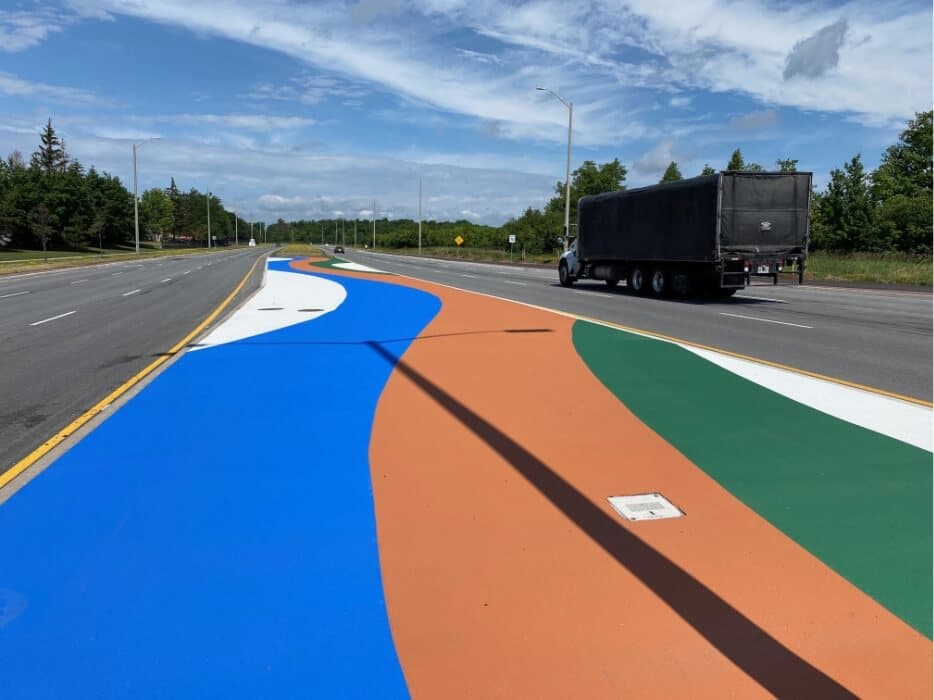
The same stamp patterns and colour systems on your driveway are on city plazas in Vancouver, transit stations in York Region, and heritage streetscapes in New Westminster. HUB Surface Systems has installed StreetPrint on some of the highest-traffic, most demanding public surfaces in Canada. When we say it lasts 20+ years, we have the municipal infrastructure to prove it.
That provenance matters. When you choose a residential driveway system backed by 30 years of Canadian municipal performance data, you're not taking a risk on an unproven product. You're getting something that has been tested at a scale and under conditions your driveway will never approach.
Patterns and Colour
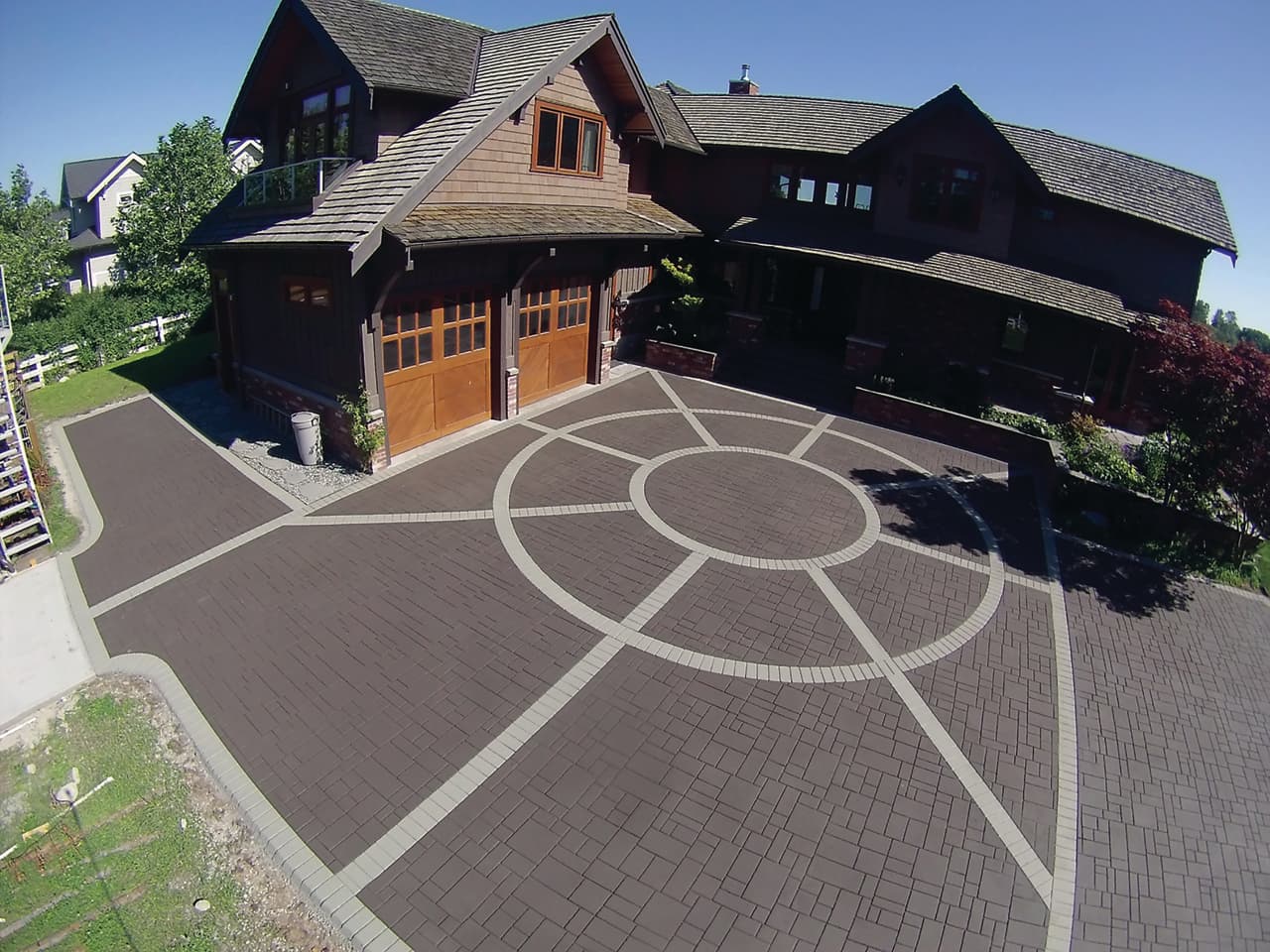
StreetPrint offers 12+ stamp patterns: herringbone brick, running bond, cobblestone, fan pattern, slate, and more. Colours are drawn from the StreetBond palette — warm brick-reds, charcoal greys, terracotta, sandstone, and custom matches for heritage or architectural consistency.
Custom medallions, border accents, and multi-colour combinations are available for properties that want something beyond standard. The orca medallion driveway installations in BC are a good example — fully custom graphic elements stamped and coloured to match the homeowner's vision.
The Bottom Line
If you're making a decision between interlocking stone and stamped asphalt, the honest answer is: interlocking stone wins on day one. Stamped asphalt wins on every day after that.
Lower installation cost. Lower maintenance burden. Twenty-plus-year lifespan. Municipal-grade materials. Installed in one to two days.
If you want to see what StreetPrint looks like on a property like yours, browse the residential driveway gallery or contact us to request a spec sheet. We can match a pattern and colour to your property and walk you through the installation process.
HUB Surface Systems serves residential and commercial clients across Canada. East: Milton, Ontario — doug.bain@hubss.com. West: Ladysmith, BC — cleve.stordy@hubss.com.